Turn a strong product into repeatable growth.
Your product has potential, but growth still depends too much on the founders, isolated wins or work that does not repeat. We help you find what is holding growth back and build a commercial approach your team can run.
More commercial activity does not fix the wrong problem.
Growth can slow for very different reasons. The company may be pursuing too many customer groups. The value may be difficult to explain. The route to customers may not fit how they buy. Opportunities may enter the pipeline but fail to convert. Or important deals may still depend on a founder.
Adding more marketing or sales activity before finding the real problem usually adds cost and noise.
A strong product can still be difficult to sell.
Product use, positive feedback and successful pilots matter. But they are not the same as a customer choosing, buying and continuing to pay for the product.
Commercial Growth connects the product to a clear customer, a reason to buy and a way to win business repeatedly.
Build a repeatable way to win and grow customers.
We help you focus on the customers that matter, make the value clear, improve how demand becomes revenue and document what the team should repeat.
The goal is not simply more activity. It is stronger commercial performance with less dependence on individual founders.
We build commercial strength in four stages.
Identify the primary commercial constraint.
Choose the target customers, market position and commercial priorities.
Build the offer, go-to-market approach and sales system. Test them in the market and improve what does not work.
Make what works repeatable inside the company. Then we step back.
- Growth constraint and commercial priorities
- Customer segments and buying dynamics
- Competitive landscape and market position
- Differentiation and value proposition
- Commercial model and revenue drivers
- 90-day priorities and success measures
- Customer acquisition model
- Sales process and pipeline
- Channels and partnerships
- Offers, pricing and conversion paths
- Commercial roles and responsibilities
- Metrics, forecasting and operating cadence
- Focused commercial sprints
- Customer and market validation
- Channel and revenue-lever testing
- Performance, conversion and signal analysis
- GTM playbooks and operating routines
- Capability transfer to the team
Less dependence on the founders. More repeatable results.
Share your situationStart with the problem, not a standard programme.
We begin with an outside view of the company’s commercial situation. The diagnosis determines the priorities, the work and the sequence.
CapReady can challenge the team’s choices, work alongside the founders or take responsibility for defined work. We agree the objective, responsibilities, timetable, measures and commercial terms before starting.
This is not outsourced marketing or a sales team for hire. We do not add activity for its own sake. The work is designed to leave the company with clearer choices, working practices and stronger internal ownership.
The partners lead every engagement.
Janne Kiiha and Jan Nilsson remain directly involved and accountable throughout the engagement. There is no handover to a junior delivery team.
When the work requires specialist expertise, we can involve senior experts from our network. Their role, scope and commercial terms are made clear in advance. The company meets and approves every expert before they join the engagement.
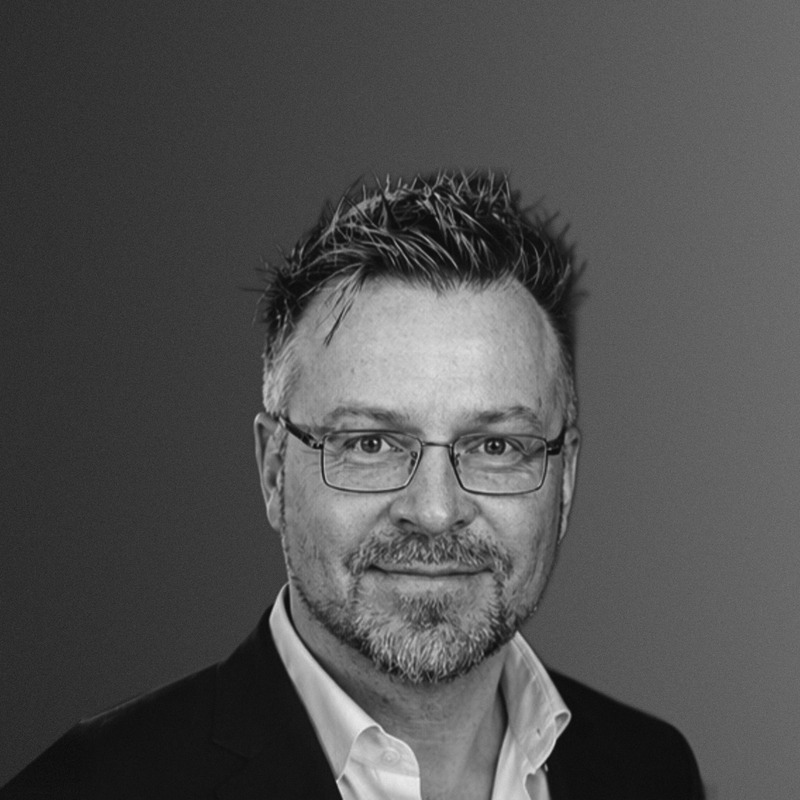
Janne has built and led commercial functions across Northern Europe. He focuses on customer choice, positioning, go-to-market, sales execution and making commercial work repeatable.
LinkedIn
Jan has founded, financed, scaled and sold technology companies. He focuses on company building, business economics, ownership and the choices required to turn commercial progress into a stronger business.
LinkedInTogether, they lead the engagement, bring in the right expertise when needed and remain responsible for the quality of the work.
Frequently asked questions
Talk to us when the product is strong but growth remains unpredictable, important sales still depend on the founders, the pipeline is not converting or the team is doing a great deal without knowing what is working.
It is usually better to diagnose the problem before hiring more people or increasing marketing and sales spending.
We review how the company chooses customers, explains value, creates demand, sells, retains accounts and makes money. We compare the team’s assumptions with customer behaviour and commercial results.
The aim is to identify the main problem to solve first, not produce a long list of possible improvements.
It can include both. Clear choices come first, but they need to be tested in real work. Depending on the engagement, we can work with the team on customer research, positioning, offers, campaigns, sales process, pipeline, measures and practical tools.
The scope reflects what the company can do itself and where experienced support or ownership is missing.
No. We do not provide general marketing production, lead volume or sales capacity without a clear commercial purpose.
We help the company decide where to focus, build and test the right commercial approach, and make the working model usable by its own team.
That is a common starting point. We examine what the founders do differently when they win business, which parts can be taught and which still require their involvement.
We then document the process, improve the tools and hand over responsibility in a realistic sequence. The aim is to reduce founder dependency without removing founders from the moments where they still matter.
Yes. We can compare segments, speak with customers, examine buying behaviour and assess where the company creates the most value and has the best chance of winning.
The result should be a clear primary focus, not a description that includes every possible customer.
Yes, when the company first needs stronger commercial proof. Better customer focus, clearer buying evidence and a more repeatable sales approach can strengthen a later investment case.
The work is still measured by commercial progress. Fundraising Preparation and Fundraising Execution are separate starting points when financing becomes the immediate priority.
The measures depend on the problem. They may include qualified pipeline, conversion, sales cycle, customer acquisition cost, retention, expansion, revenue quality or the team’s ability to run the process without founder involvement.
We agree the relevant measures at the start. Activity alone is not a result.
It depends on the problem and how much market testing is required. A focused diagnosis can be completed quickly. Building, testing and transferring a working commercial approach usually takes longer because results have to come from real customers and real sales work.
We agree the scope, timetable and end point before starting.
No. Customers and markets make their own decisions. We can improve the focus, commercial choices, execution and learning process. We do not guarantee revenue, customer wins, market response or timing.
Share a short description of the company, its customers, current commercial activity and what is not progressing as expected. Relevant sales, pipeline or customer material helps us understand the situation.
We review the starting point and determine whether Commercial Growth is the right place to begin.
We agree the scope, responsibilities, timetable, measures and commercial terms before work begins. The structure depends on the problem and the responsibility CapReady takes. There is no open-ended billable-hour engagement.
Growth rarely improves by doing more of everything.
Send us a short description of the company, its customers, current commercial activity and what is preventing progress. Include any material that helps explain the situation.